
China’s Robot Legs Are Moving From Rehab Labs Into Everyday Mobility
Exoskeletons and lower-limb robotics are becoming a serious test of whether embodied AI can improve mobility outside the factory.
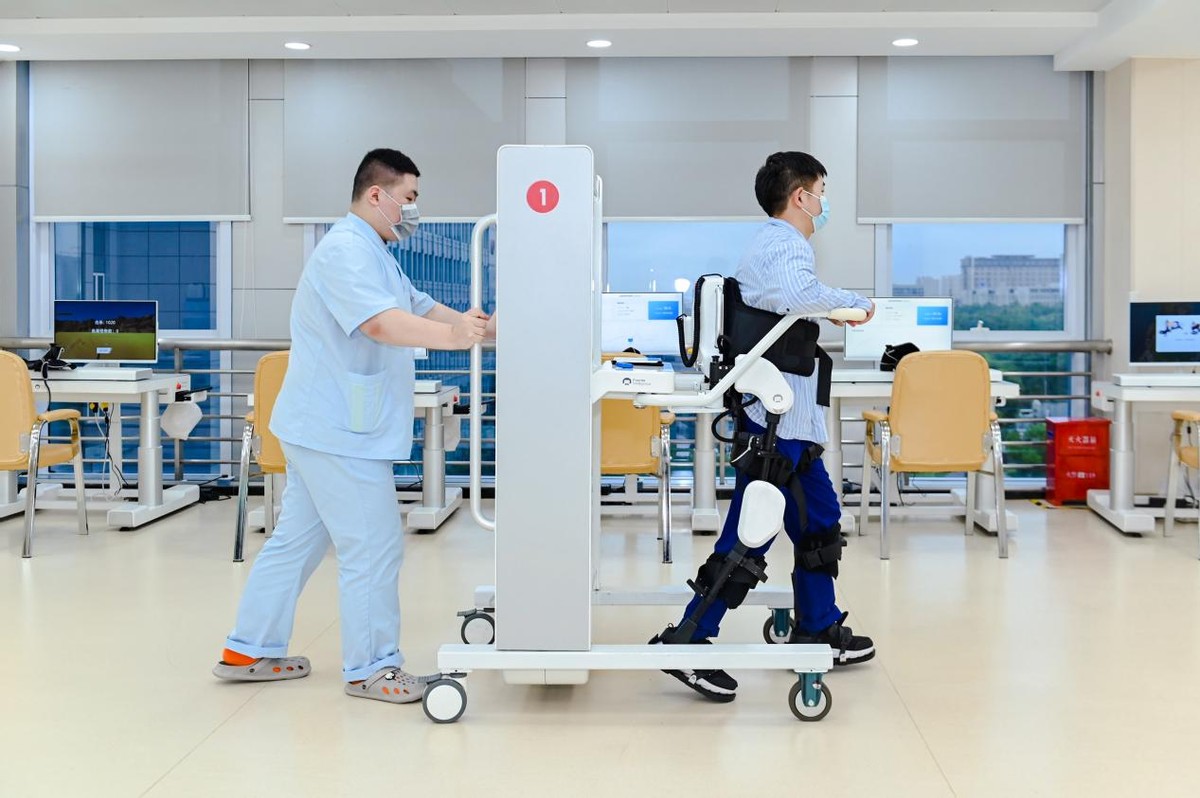
Humanoid robots usually get attention for walking, running or balancing. But one of the more practical uses for legged robotics is much closer to the ground: helping people recover or regain mobility.
In Shanghai, rehabilitation centers are already using robotic exoskeletons for standing and walking exercises. These systems do not turn a patient into a science-fiction cyborg. They provide controlled assistance, repeatable movement and data that therapists can use during rehabilitation.
That distinction matters. The near-term opportunity is not replacing wheelchairs for everyone. It is building a wider set of mobility tools for different stages of recovery, disability and age-related decline.

Why the technology is improving now
Lower-limb robots need compact actuators, force sensing, battery systems and fast control loops. Those are many of the same building blocks now improving across humanoid robotics.
China’s large robotics and electric-mobility supply chains can shorten the path from prototype to lower-cost hardware. That may be especially important for rehabilitation technology, where price, maintenance and reliability determine whether a device can move beyond specialist hospitals.
Research teams are also working on assist-as-needed control, where the machine provides only the level of support required instead of forcing every user through the same motion.

From clinic to daily assistance
China’s 2026 elderly-care guidelines explicitly encourage technologies including exoskeleton robots and muscle-support systems. That creates a policy environment where mobility robotics can be tested not only in laboratories but also in community care and rehabilitation settings.
The harder challenge is everyday use. A device that works for thirty minutes with a therapist nearby is very different from one that must handle curbs, uneven floors, fatigue and unpredictable movement safely throughout the day.
That is why the most meaningful progress will be measured in independence, comfort, reliability and cost — not how dramatic a demo looks.
What to watch next
The next step is likely to be specialization. Some systems will remain clinical rehabilitation machines, while others may become lighter wearable assistive devices for walking, standing or reducing fatigue.
The same motion-control advances driving humanoid robots could eventually make those systems more adaptive. But widespread replacement of wheelchairs would require major gains in affordability, safety, battery life and ease of use.
For now, robot legs are becoming one of the clearest examples of embodied robotics moving from spectacle toward a measurable human use case.
Get every Eastern Engine article.
Free articles stay open. Membership unlocks the full archive and the weekly intelligence brief for $19/year.
Sources
Primary and official material used to support this article.
China’s Humanoid Robot Push Is Moving From Demo to Factory Floor
Updated Sep 21, 2026
The New AI Chip Race Is About More Than Raw Performance
Updated Sep 21, 2026